India has over 89 million people living with diabetes, making it the second-highest in the world. And yet, most common Indian snacks are exactly the type of food that makes blood sugar management harder.
Biscuits, namkeen, fried chips, sweet chai accompaniments, these are everywhere. They are convenient, cheap, and tasty. They are also high in refined carbohydrates, sugar, and unhealthy fats that cause rapid blood sugar spikes followed by energy crashes.
The good news is that snacking does not have to be a risk. There are diabetic-friendly snacks in India that taste genuinely good and keep your blood sugar steady. This post tells you exactly what to look for, and what to avoid.
Why Snacking Is Tricky for Diabetics in India
Snacking itself is not the problem. The problem is what most readily available Indian snacks are made from.
Refined flour (maida), deep frying, added sugar, and high sodium are the norm in packaged snacks. These ingredients cause blood glucose to spike quickly and then drop, leaving you hungry again within the hour.
Add to this the cultural habit of chai-and-biscuit breaks, office snack sharing, and evening namkeen and it becomes clear why blood sugar management is a daily challenge for millions of Indians.
What Makes a Snack Diabetic-Friendly?
Not all healthy-looking snacks are suitable for diabetics. Four things actually matter:
• Low glycemic index (GI) the food raises blood sugar slowly, not rapidly
• High fibre slows glucose absorption and prevents sudden spikes
• Adequate protein delays carbohydrate release into the bloodstream
• No added sugar avoids the obvious trigger for glucose spikes
A snack that checks all four boxes gives you real energy that lasts, without the spike-and-crash cycle that makes diabetes management so exhausting.
The ICMR’s 2024 dietary guidelines specifically recommend millets like jowar, ragi, and bajra as healthy grain choices for Indians precisely because of their high fibre and lower glycemic impact.
Common Snacking Mistakes Diabetics in India Make
Even people who are careful about their main meals often make these snacking mistakes:
• Eating “diet” or “sugar-free” packaged snacks that still contain refined flour and high sodium
• Choosing fruit juices over whole fruits juices lack fibre and spike blood sugar faster
• Reaching for namkeen or biscuits out of habit during tea breaks
• Eating from large packets instead of controlled portions even healthy snacks can cause problems in excess
• Assuming baked means healthy always check the ingredient list for maida, refined oils, and hidden sugars
The simplest rule: if a snack does not have fibre, protein, and a clean ingredient list, it is probably not as diabetic-friendly as it looks.
The Best Grains for Diabetic-Friendly Snacks
The grain used in a snack is one of the most important factors for blood sugar management. Here are the best options, all of which happen to be traditional Indian grains:
Jowar (Sorghum) GI: 62 to 70
Jowar is a complex carbohydrate with a much lower GI than refined flour or white rice. It is high in fibre, gluten-free, and digests slowly which means sustained energy rather than a blood sugar spike.
Jowar has been used in Indian cooking for centuries, particularly in Maharashtra and Karnataka. In puffed snack form, it delivers a satisfying crunch without the blood sugar consequences of fried chips.
Ragi (Finger Millet) GI: 54 to 68
Ragi is one of the most diabetes-friendly grains available in India. Its high fibre content slows glucose absorption significantly, and it is rich in calcium and protein both of which support long-term health alongside blood sugar management.
Studies show ragi consistently performs well in managing post-meal blood glucose levels, making it one of the most recommended grains for diabetics by Indian nutritionists.
Chickpea (Chana) GI: 28 to 32
Chickpea has one of the lowest glycemic index values of any food just 28 to 32. For context, white bread scores around 100. Chickpea is also high in plant protein and fibre, which together significantly slow glucose absorption.
For diabetics who need a snack that genuinely will not raise their blood sugar, chickpea-based puffs are one of the safest and most satisfying options available.
Quinoa GI: 35
Quinoa is a complete protein and has a low GI of around 35. While not traditionally Indian, it has become increasingly accessible and is an excellent base for mixed-grain snacks.
Multigrain snacks that combine quinoa with other grains typically have a blended GI of around 42 well within the low GI range, and a significant step up from regular fried snacks.
Why Baked Is Always Better Than Fried for Diabetics
Frying adds a significant amount of fat to any food and for diabetics, high fat intake (especially from refined oils) is associated with increased insulin resistance and inflammation.
Research shows that consuming fried foods four to six times a week is linked to a significantly higher risk of type 2 diabetes compared to eating them less than once a week.
Baked snacks, by contrast:
• Use little to no oil reducing overall fat and calorie content
• Preserve the natural fibre and nutrients in the grain
• Have a lower GI than their fried equivalents
• Do not carry the same inflammatory risk associated with deep-frying in refined oils
This is not just a minor difference. Swapping fried chips for baked grain puffs is one of the most impactful daily dietary changes a diabetic can make.
Pure Plated Snacks That Work for Diabetics
Pure Plated’s entire range is built around baked, whole grain snacks with no maida, no cholesterol, and high fibre. Several options are well-suited to diabetic snacking:
• Jowar Puffs (Peri Peri and Masala Munch) complex carb, baked, high fibre, gluten-free
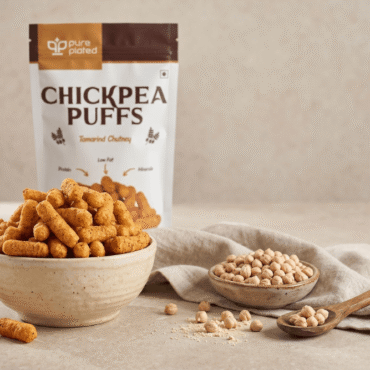
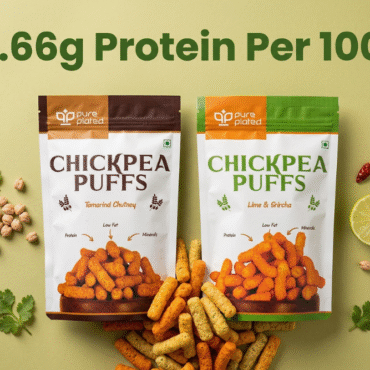
• Chickpea Puffs (Tamarind Chutney and Lime & Sriracha) the lowest GI option in the range, high protein
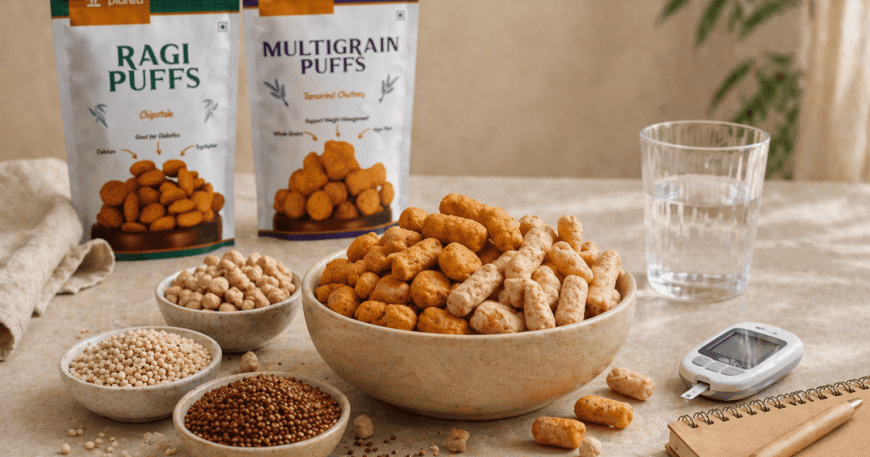
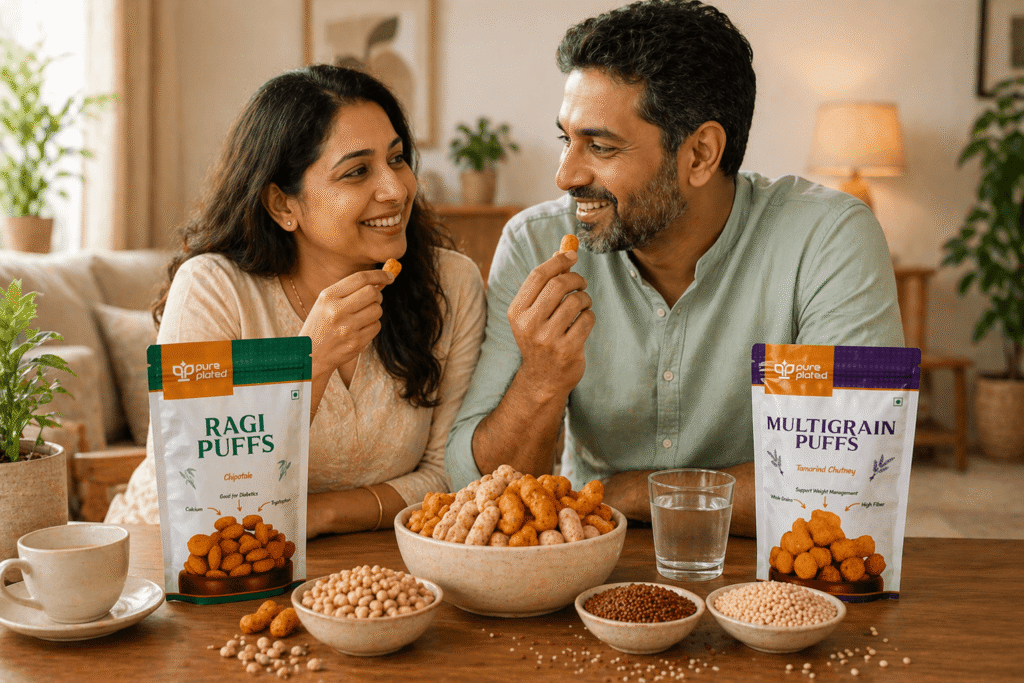
• Ragi Puffs (Chipotale and Momo Chutney) traditionally recommended for diabetes management
• Multigrain Puffs (Chat Masala and Tamarind Chutney) combines multiple low-GI grains for balanced snacking
Each product is portion-controlled, which is important for diabetics who need to be mindful of total carbohydrate intake even from healthy sources.
You can explore the full range at pureplated.in/shop/ and read more about how to choose the right snack at pureplated.in/5-checks-before-you-buy-healthy-puffs-online/.
Practical Tips for Smarter Diabetic Snacking
Choosing the right snack is only part of the picture. Here are a few habits that make a real difference:
• Stick to one serving at a time even low-GI snacks can raise blood sugar in large quantities
• Pair your snack with a glass of water sometimes thirst presents as hunger
• Do not skip snacks entirely going too long without food can cause blood sugar to drop and trigger overeating
• Read the ingredients list, not just the front label look for whole grains, avoid maida and added sugar
• Have your snack at consistent times regular eating patterns help stabilise blood glucose across the day
The Bottom Line
Managing diabetes in India does not mean giving up the pleasure of snacking. It means being more intentional about what you reach for.
Grain-based baked puffs made from jowar, ragi, chickpea, and quinoa offer a rare combination they satisfy cravings, they taste genuinely good, and they do not spike your blood sugar the way conventional snacks do.
If you have been looking for diabetic-friendly snacks in India that do not feel like a compromise, start with the grains that Indian food has always known were good for you and look for them in a baked, portion-controlled form.
Explore Pure Plated’s full range of baked grain snacks at pureplated.in/shop/ and find your everyday snacking option that works with your health not against it.